
How to Choose a Serum for Mature Skin: Hydration, Firmness & Radiance
Mature skin does not necessarily need more products, it needs the right ones. As skin changes over time, concerns such as dehydration, reduced elasticity, uneven tone, dullness and a less resilient skin barrier can become more noticeable. A well-formulated serum for mature skin can target these specific needs without making the routine unnecessarily complicated.
But not every serum serves the same purpose. A hydrating serum, a lightweight serum-emulsion and an oil-based active concentrate can each support the skin differently. Understanding those differences makes it easier to choose a formula based on what your skin actually needs rather than simply following the latest skincare trend.
In this guide, we look at the key types of serums for mature skin, the ingredients worth considering, and how to combine them thoughtfully for hydration, firmness, radiance and everyday skin resilience.
What Is a Face Serum?
A face serum is a skincare product designed to deliver targeted ingredients to the skin in a relatively lightweight format. Unlike a traditional moisturizer, which primarily helps soften the skin and reduce moisture loss, a serum is usually formulated around specific goals, such as hydration, improving the appearance of firmness and uneven tone, antioxidant support or skin comfort.
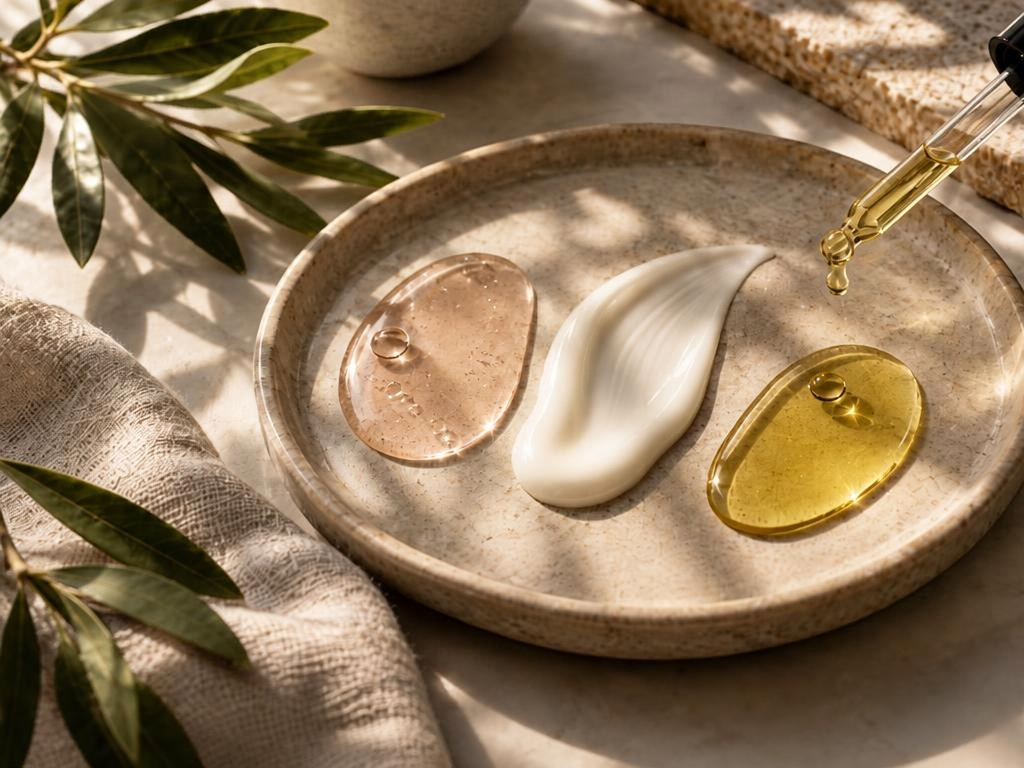
Despite the name, serums do not all have the same texture. Some are light, water-based formulas; others are serum-emulsions containing both water and a small amount of lipids; and some are anhydrous, oil-based concentrates. What makes a product a serum is therefore not simply whether it feels watery or comes in a dropper bottle, but the role it plays within the skincare routine and the targeted ingredients it delivers.
For mature skin, this distinction can be particularly useful. Instead of looking for one product labelled “anti-aging,” you can choose a serum according to what your skin needs most — more hydration, support for firmness and elasticity, improved radiance, antioxidant protection, or a combination of these benefits.
What Should a Serum for Mature Skin Actually Do?
As skin changes over time, it may retain moisture less efficiently, feel drier or less supple, and show more visible changes in firmness, texture and tone. A well-chosen serum for mature skin should therefore address the skin’s actual needs rather than simply carry an “anti-aging” label.
For many people, the priorities are a combination of hydration, barrier support, visible firmness and elasticity, antioxidant protection, even-looking tone and skin comfort. Not every serum needs to address all of these at once and often, a more focused formula is the better choice.
It is also important to remember that mature skin is not a skin type. It can be dry, combination, sensitive or prone to dehydration. The right serum depends not only on age, but on the condition of your skin, the rest of your routine and what you would most like to improve.
Hydrating Serums for Mature Skin: When Skin Needs More Water
Dehydration can become more noticeable as skin matures, but dehydrated skin and dry skin are not the same thing. Dehydrated skin lacks water, while dry skin lacks sufficient lipids. Mature skin can experience either or both at the same time.
A hydrating serum focuses primarily on increasing and retaining water within the skin. Look for humectants such as hyaluronic acid and glycerin, which attract water and help skin feel smoother, softer and more supple. Aloe vera and other well-chosen hydrating ingredients can provide additional comfort without creating a heavy finish.
Hyaluronic acid is particularly useful because it can hold significant amounts of water and support a plumper, more hydrated appearance. However, a good hydrating serum is not simply about adding the highest possible concentration of hyaluronic acid. The complete formulation, molecular weight, supporting humectants and how the serum feels on the skin all matter.
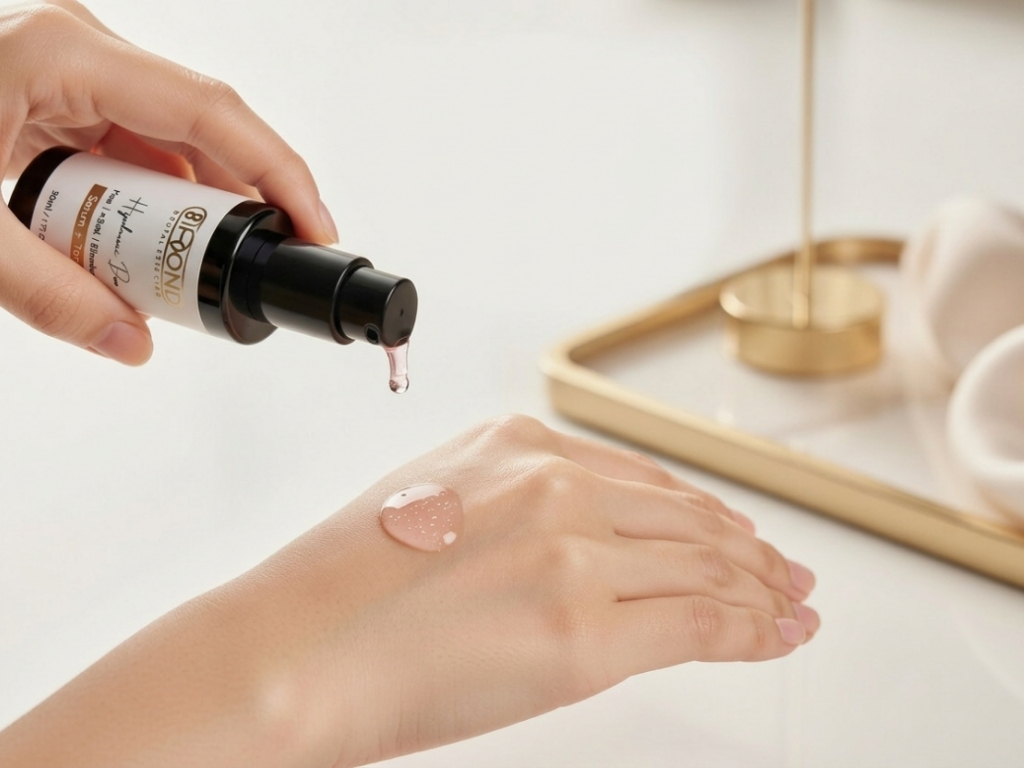
For this type of support, BIOYOND Hyaluronic Duo Serum + Tonic is our water-based hydration-focused serum, formulated to replenish hydration without adding a substantial lipid layer. It can be used when skin feels tight, dehydrated or simply needs an additional hydration step before moisturizer.
For a deeper explanation of the difference between water and oil needs in the skin, read our guide to hydration vs. moisture.
Firming Serums for Mature Skin: Supporting Elasticity & Resilience
When firmness and elasticity become a greater concern, hydration alone may not address everything the skin needs. A firming serum for mature skin can combine targeted actives with ingredients that support barrier function, skin comfort and a smoother, more resilient appearance.
Ingredients such as niacinamide are particularly valuable in this type of formula because they can support the skin barrier while helping improve the appearance of uneven tone, texture and enlarged-looking pores. Other targeted botanical actives can complement this approach by supporting skin that feels stressed or less resilient.
This is also where a serum-emulsion can be useful. Unlike a purely water-based serum, an emulsion contains both an aqueous phase and a lightweight lipid phase. This allows the formula to combine water-binding ingredients with emollients such as squalane and botanical oils, providing additional softness and conditioning without necessarily feeling like a traditional cream.
BIOYOND Bio Lift Serum was formulated around this approach. It combines 3% Niacinamide and 3% AnnonaSense CLR™ with Hyaluronic Acid, Squalane, Jojoba and Hibiscus Oil in a lightweight serum-emulsion designed to support visible firmness, hydration, skin comfort and resilience.
A serum-emulsion can be particularly useful when mature skin feels as though a hydrating serum alone is no longer quite enough, but a rich cream is more than you want from your treatment step.
Antioxidant & Renewal Serums: When Radiance and Visible Aging Are the Priority
When dullness, uneven-looking tone, texture and visible signs of aging become the priority, a serum built around antioxidant and renewal-supporting actives may be more appropriate than hydration alone.
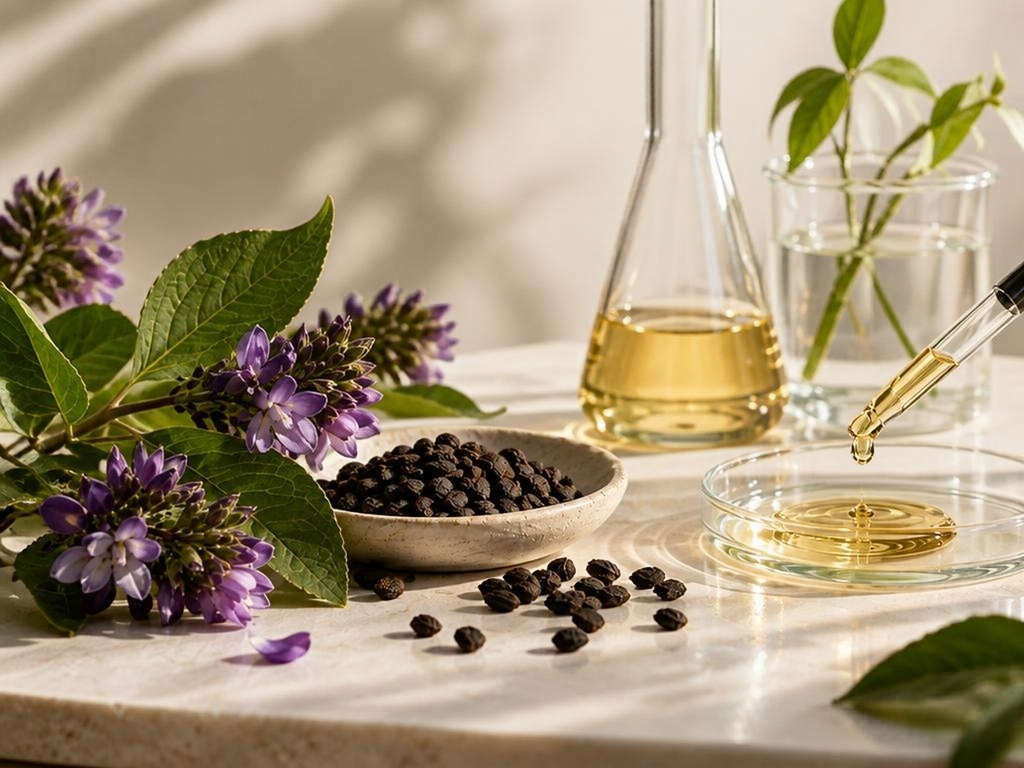
Vitamin C is one of the best-known antioxidant ingredients in skincare, but not all forms of Vitamin C behave the same way. Water-soluble and oil-soluble derivatives differ in stability, formulation requirements and skin feel. Tetrahexyldecyl Ascorbate (THD Ascorbate) is an oil-soluble Vitamin C derivative that can be incorporated into an anhydrous treatment formula, making it particularly interesting for people who prefer a lipid-based serum.
Bakuchiol offers another approach to age-supportive skincare. This plant-derived active is used to help improve the appearance of fine lines, uneven texture and overall skin tone, while fitting comfortably into routines where a retinoid may not be desired.
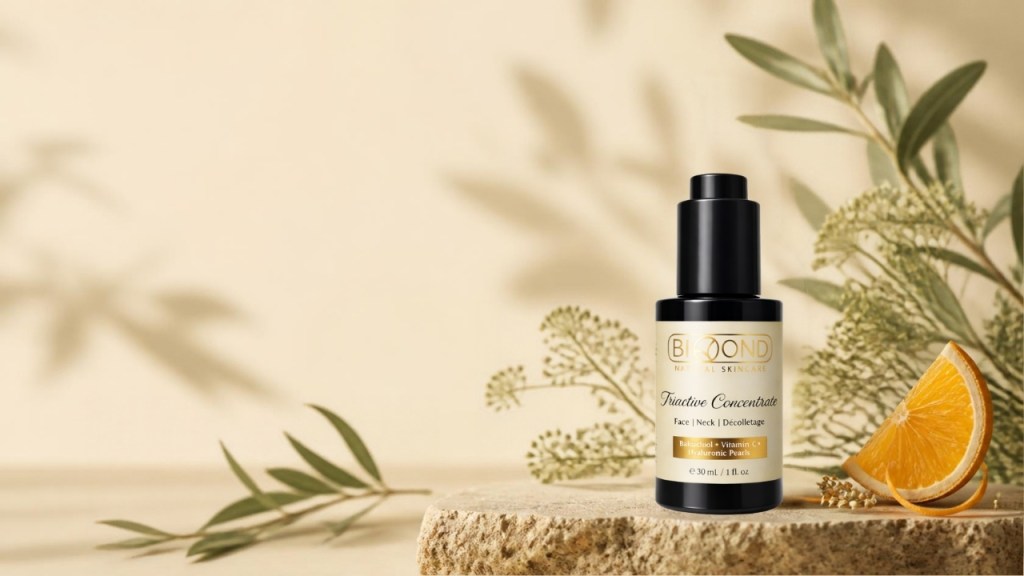
This is the formulation approach behind BIOYOND TriActive Concentrate, an anhydrous oil-based serum combining 4% THD Ascorbate, 1% Bakuchiol and natural Bisabolol in a lightweight lipid base of Squalane, Jojoba, Marula, Rosehip and Calendula-infused oil.
Because it contains no water, TriActive feels and behaves differently from both a traditional hydrating serum and a serum-emulsion. It is best thought of as a concentrated lipid-based treatment step, particularly suited to routines focused on radiance, smoother-looking texture and antioxidant support.
Water-Based Serum, Serum-Emulsion or Oil Serum: Which is best serum for mature skin?

The best serum for mature skin format depends on what your skin needs most. Texture alone does not determine how effective a serum is. The formulation, active ingredients and role it plays in your routine matter more.
Choose a water-based hydrating serum when dehydration, tightness or lack of plumpness is your main concern. These formulas are typically lightweight and work well underneath moisturizer, sunscreen or other treatment products.
Choose a serum-emulsion when you want hydration together with additional conditioning and barrier support. The combination of water-based ingredients and lightweight lipids can be particularly useful for mature skin that is becoming less supple or resilient but does not need a rich treatment cream.
Choose an oil-based serum or concentrate when your priority is lipid-soluble actives, antioxidant support, radiance and additional emollience. These formulas generally belong later in the routine because oils can create a more occlusive layer than water-based products.
| If your main concern is… | Consider… |
|---|---|
| Dehydration, tightness, lack of plumpness | Water-based hydrating serum |
| Firmness, resilience + hydration | Serum-emulsion |
| Dullness, uneven-looking tone, antioxidant support | Oil-based active concentrate |
| Dryness as well as dehydration | Hydrating serum followed by lipid support |
| Several concerns at once | Layer compatible formulas strategically rather than adding more products indiscriminately |
There is no rule that mature skin must use only one serum but there is also no reason to layer several products simply because they are called serums. A thoughtful routine starts by identifying the skin’s priorities and choosing the fewest products that address them effectively.
Can You Use More Than One Serum?
Yes, more than one serum for mature skin can be used in the same routine, but layering should have a purpose. Using several serums does not automatically produce better results, and too many active products can make a routine unnecessarily complicated.
As a general principle, apply lighter, water-based formulas before richer emulsions and oils. This allows water-based hydration to reach the skin before more emollient products are applied.
A routine might therefore look like:
1. Cleanse
Start with clean skin to remove makeup, sunscreen and daily impurities.
2. Hydrating serum or tonic
Apply a water-based formula such as Hyaluronic Duo Serum + Tonic when additional hydration is needed.
3. Serum-emulsion
Follow with Bio Lift Serum when your routine calls for additional support for firmness, resilience and barrier comfort.
4. Moisturizer
Apply a cream when additional moisture and barrier support are needed.
5. Oil-based treatment
An anhydrous concentrate such as TriActive Concentrate can be used as a final treatment step in the evening, particularly when the routine is focused on radiance, antioxidant support and visible signs of aging.
During the day, finish your routine with broad-spectrum sunscreen.
You do not necessarily need every step every day. For example, well-balanced skin may use Bio Lift on its own before sunscreen in the morning, while an evening routine might pair hydration with TriActive. The goal is to build the routine around how your skin feels and what it needs, rather than around the number of products you own.
Frequently Asked Questions About Serums for Mature Skin
What serum for mature skin is the best?
There is no single serum that is best for all mature skin. Choose according to your main concern: a water-based serum for dehydration, a serum-emulsion when you want hydration plus additional conditioning and resilience support, or an oil-based active concentrate when antioxidant care, radiance and lipid support are priorities.
Should mature skin use a serum every day?
A well-tolerated serum for mature skin can usually be used daily, depending on its active ingredients and the rest of your routine. More frequent use is not always better — consistency and skin tolerance matter more.
Do I need both a serum and a moisturizer?
Not necessarily. A lightweight hydrating serum usually benefits from being followed by a moisturizer, particularly when skin is dry. A serum-emulsion may provide enough conditioning for some skin types, especially during warmer weather. Let your skin’s comfort guide the final step
Should serum go before or after moisturizer?
Water-based serums and serum-emulsions are generally applied before moisturizer. Oil-based concentrates are typically used later in the routine, often after a cream or as the final treatment step.
Can I use different serums in the morning and evening?
Yes. Your morning and evening routines do not need to be identical. For example, you may prefer hydration or a lightweight serum-emulsion during the day and use an antioxidant or oil-based treatment in your evening routine.
A More Thoughtful Approach to Serums
Choosing a serum for mature skin does not have to mean searching for the strongest “anti-aging” product. Understanding whether your skin needs hydration, additional lipid support, visible firmness or antioxidant care makes it easier to choose purposefully and keep the routine simple.
At BIOYOND, this is the philosophy behind our formulations: support the skin with what it needs, without adding complexity for the sake of it.