Natural Retinol Alternatives: What the Evidence Really Says
Natural retinol alternatives have become one of skincare’s most appealing promises: many of the visible benefits associated with retinol, but from botanical ingredients and potentially with less irritation. Bakuchiol is often called “nature’s retinol,” while rosehip oil, rambutan, peptides and various plant extracts are increasingly promoted as retinol-like ingredients.
But there is an important problem with that comparison: most of these ingredients are not retinol, do not convert into retinoic acid in the skin, and do not work through exactly the same biological pathways as retinoids. That does not make them ineffective. It means we need to look at what each ingredient can realistically contribute rather than treating “natural retinol alternative” as a single category.
Retinol itself has decades of research behind its use in skincare, particularly for visible signs of photoaging such as uneven texture, pigmentation and fine lines. Yet it is not ideal for every person or every routine. Dryness, peeling and irritation can occur, particularly when retinoids are introduced too quickly or used at concentrations the skin does not tolerate well.
So what should you look for if you want a different approach?
Among botanical ingredients, bakuchiol has some of the most interesting clinical evidence, including research directly comparing topical bakuchiol with retinol. Other ingredients frequently described as retinol alternatives may support similar skincare goals such as antioxidant protection, more even-looking tone or improved skin comfort, but the evidence and mechanisms are not equivalent.
In this guide, we’ll look beyond the marketing term “natural retinol alternatives” and examine what the evidence actually tells us: where bakuchiol stands, which other ingredients deserve consideration, what they cannot genuinely replace, and how to choose an approach that makes sense for your skin.
Why Do Some People Look for Retinol Alternatives?
Retinol is one of the most extensively studied cosmetic ingredients for addressing visible signs of skin aging, but effectiveness is only part of the equation. A skincare ingredient also has to fit the person using it, the formulation it is delivered in and the rest of the routine.
For some people, retinol can cause dryness, peeling, tightness or irritation, particularly during the adjustment period or when a product is introduced too frequently. Concentration matters, but so do formulation, frequency of use and the condition of the skin barrier.
This is where the search for natural retinol alternatives becomes more interesting. The goal should not necessarily be to find a botanical ingredient that “replaces” retinol molecule for molecule. A more useful question is: what skin result are you trying to achieve?
Someone concerned about uneven tone may benefit from a different ingredient strategy than someone focused on fine lines, loss of firmness or sensitivity. And someone who simply cannot comfortably maintain a retinol routine may value an ingredient with more modest evidence if it allows consistent use.
Retinol Irritation Does Not Mean Retinol Is “Bad”
Dryness or irritation from retinol does not make the ingredient harsh or unsafe by definition. Retinoids influence processes within the skin, and tolerability varies considerably between individuals and formulations. Introducing retinol gradually and supporting the skin with an appropriate routine can make a significant difference.
At the same time, skincare does not have to revolve around a single ingredient. There are other ways to support the appearance and condition of changing skin and understanding those differences is more useful than dividing ingredients into “natural” and “synthetic” camps.
What Does “Natural Retinol Alternative” Actually Mean?
The phrase natural retinol alternative is useful for search and conversation, but scientifically it can be misleading. Retinol belongs to the retinoid family and ultimately participates in retinoid signalling in the skin. A botanical ingredient does not become a retinoid simply because it may help improve some of the same visible concerns.
Instead, ingredients marketed as retinol alternatives generally fall into a broader category: they may support some overlapping skincare goals such as smoother-looking texture, more even-looking tone, antioxidant protection or the appearance of firmness but they may do so through different mechanisms.
That distinction matters. If two ingredients can both improve the appearance of fine lines, for example, it does not necessarily mean they work in the same way or have the same level of clinical evidence.
Not Every “Retinol Alternative” Is Equal
This is where skincare marketing can become confusing. Bakuchiol, rosehip oil, peptides, vitamin C and botanical extracts may all appear on lists of natural retinol alternatives, yet they are very different ingredients with different functions and levels of evidence.
Rather than asking whether an ingredient is “the natural version of retinol,” a better approach is to ask three questions: What does the ingredient actually do? What evidence supports it? And does that function address what your skin needs?
Among the botanical ingredients commonly compared with retinol, bakuchiol deserves particular attention because it has been studied clinically in direct comparison with retinol. That does not make bakuchiol a retinoid but it gives us considerably more to evaluate than a marketing comparison alone.
Bakuchiol: The Most Studied Botanical Retinol Alternative
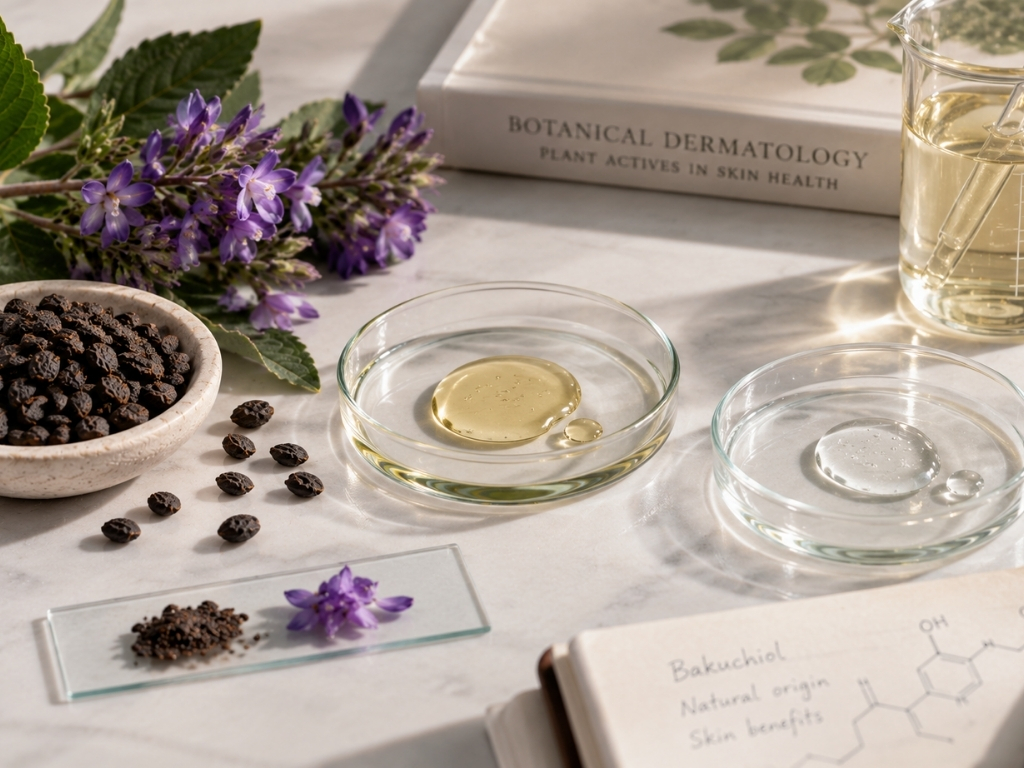
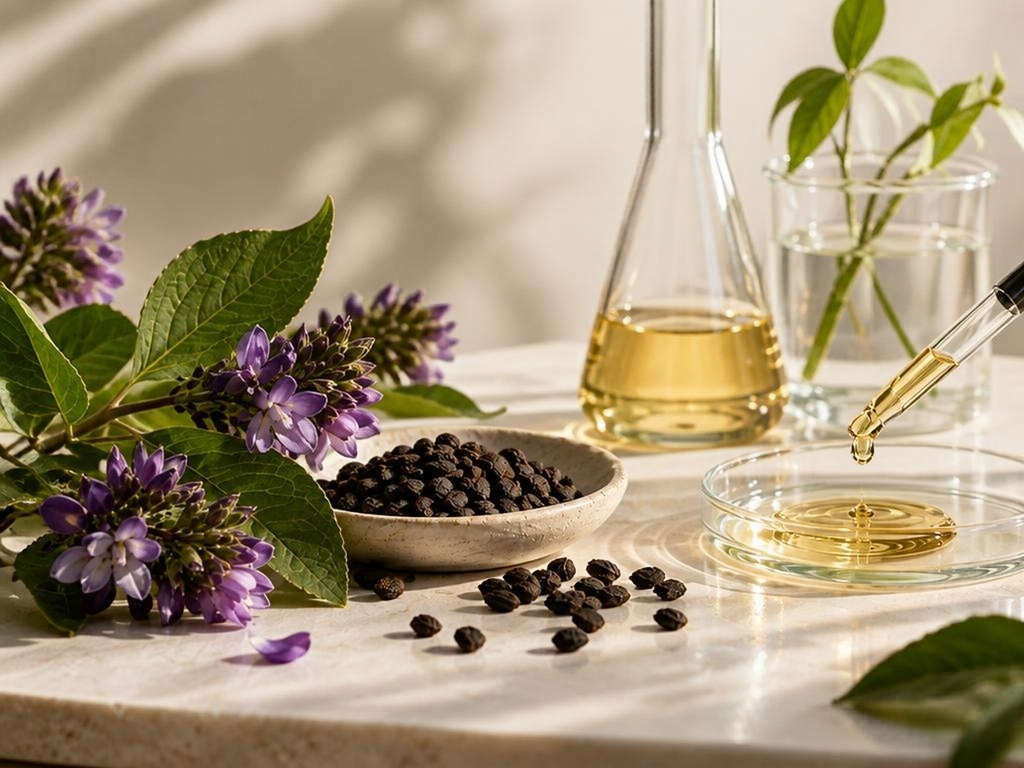
Bakuchiol is a plant-derived compound associated with Psoralea corylifolia (also known as babchi). Unlike retinol, bakuchiol is not a vitamin A derivative and is not a retinoid. Its molecular structure is different, yet research suggests that some of its effects on skin biology may overlap with pathways influenced by retinol.
That distinction is precisely why bakuchiol is interesting. Calling it simply “natural retinol” is inaccurate; describing it as a botanical ingredient with some retinol-like activity is much closer to what the evidence supports.
What Does the Clinical Research Show?
One frequently cited randomized, double-blind study followed 44 participants for 12 weeks. Participants used either 0.5% bakuchiol twice daily or 0.5% retinol once daily. Both groups showed significant improvements in measured wrinkle surface area and hyperpigmentation, with no statistically significant difference between the two groups for those outcomes. Participants using retinol reported more scaling and stinging.
That is meaningful evidence but it should not be exaggerated. The study was relatively small and lasted only 12 weeks. More recent systematic reviews have found promising results for bakuchiol in areas including photoaging, pigmentation and acne, while also pointing out an important limitation: many available human studies are small, uncontrolled or evaluate formulas containing several active ingredients rather than bakuchiol alone.
So the evidence does not justify saying that bakuchiol has been proven equivalent to retinol overall. Retinoids have a much larger body of research behind them. What we can reasonably say is that bakuchiol has emerging clinical evidence that makes it one of the more credible botanical ingredients discussed as a retinol alternative. A 2024 systematic review of cosmeceuticals, for example, rated the evidence supporting retinol more strongly than the evidence supporting bakuchiol
Why Bakuchiol Fits a Different Kind of Routine
For someone who does not tolerate retinol well, prefers a botanical-focused routine, or simply wants another approach to visible signs of skin aging, bakuchiol can be an interesting option. Its value is not that it is a “natural copy” of retinol. Its value is that it offers its own activity with some overlapping cosmetic outcomes and a different tolerability profile.
And formulation still matters. The concentration of bakuchiol, the vehicle carrying it, the other ingredients surrounding it and how consistently the finished product is used all influence the experience of the formula. Looking only for the word bakuchiol on an ingredient list tells us much less than understanding the complete formulation.
What About Other Natural Retinol Alternatives?
Bakuchiol may have the strongest direct comparison with retinol among botanical ingredients, but it is far from the only ingredient marketed as a natural retinol alternative. Rosehip oil, rambutan extracts, algae and other botanicalsfrequently appear under the same label.
The problem is that sharing some skincare benefits with retinol does not make an ingredient retinol-like. These ingredients may still be valuable but for different reasons.
Rosehip Oil: Valuable, but Not Plant Retinol
Rosehip oil is rich in fatty acids and naturally occurring antioxidant compounds, making it useful for supporting softness, lipid replenishment and the overall condition of dry or depleted skin.
You may also see claims that rosehip oil is a “natural source of retinol.” That description should be treated cautiously. Rosehip oil is not equivalent to a standardized retinol treatment, and its value in a formulation is better understood through its lipid and antioxidant profile rather than by presenting it as botanical retinol.
Rambutan and Algae: Interesting Supporting Ingredients
Rambutan extracts and marine or algae-derived ingredients can be valuable cosmetic actives, depending on the specific extract, its composition and the supplier evidence behind it. Some are investigated for antioxidant activity, skin appearance, elasticity or other aspects of skin condition.
But terms such as rambutan or algae describe broad ingredient families—not one standardized active with one predictable effect. Without knowing the particular extract, concentration and supporting data, it is difficult to make a meaningful comparison with retinol.
Similar Skin Goals Do Not Mean Identical Ingredients
This is an important distinction when choosing skincare. An antioxidant can help protect against oxidative stress. A lipid-rich botanical oil can improve softness and reduce moisture loss. A peptide may support a particular aspect of skin appearance. A retinoid can influence retinoid-responsive processes in the skin.
All may have a place in a thoughtful routine, but they are not interchangeable simply because several of them are associated with smoother, brighter or more youthful-looking skin.
Bakuchiol vs Retinol: How Are They Actually Different?
Bakuchiol and retinol are often placed side by side because they can address some of the same visible skin concerns, but they are fundamentally different ingredients.
Retinol is a vitamin A derivative and part of the retinoid family. In the skin, it undergoes conversion steps before becoming retinoic acid, the biologically active form that interacts with retinoid receptors. This well-studied pathway is one reason retinoids have such an established role in addressing visible photoaging.
Bakuchiol is not a retinoid and does not need to become retinoic acid to function. Research suggests that it can influence some biological processes associated with skin aging and produce certain visible outcomes that overlap with those seen with retinol, but that does not mean the two ingredients work identically.
Is Bakuchiol as Effective as Retinol?
This is where skincare headlines often go further than the evidence.
The small 12-week clinical study discussed earlier found improvements in wrinkles and hyperpigmentation with both 0.5% bakuchiol and 0.5% retinol. That makes the comparison interesting, but one study involving 44 participants is not enough to establish that bakuchiol and retinol are universally equivalent.
Retinoids have a substantially larger and longer-established evidence base. Bakuchiol’s research is promising, but still developing.
The practical takeaway is therefore not that one ingredient has to replace the other. They represent different formulation approaches to some overlapping skincare goals, and the right approach can depend on skin tolerance, the formulation itself and what someone wants from their routine.
Why BIOYOND Formulates with 1% Bakuchiol
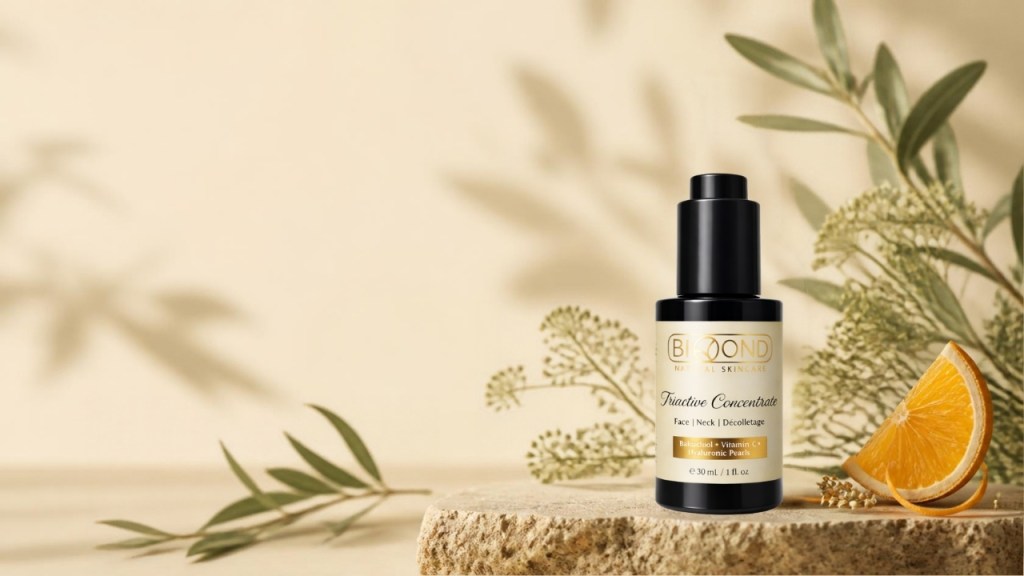
At BIOYOND, bakuchiol was not selected simply because it is fashionable or frequently described as a “natural retinol alternative.” In TriActive Concentrate, it is used at 1% as part of a deliberately simple oil-based active system designed for the face, neck and décolletage.
But concentration alone does not define a formula. Bakuchiol sits alongside 4% tetrahexyldecyl ascorbate (THD ascorbate), an oil-soluble vitamin C derivative, and natural bisabolol. Each ingredient has a different role rather than attempting to make one active do everything.
Three Actives, Three Different Roles
Bakuchiol 1% is the formula’s botanical active selected to support smoother-looking texture, more even-looking tone and the appearance of skin affected by visible signs of aging.
THD Ascorbate 4% provides an oil-soluble approach to vitamin C. It complements bakuchiol through a different formulation pathway, with vitamin C valued particularly for antioxidant support and its role in maintaining healthy-looking skin.
Natural Bisabolol is included for its skin-soothing properties, helping round out an active formula intended to remain comfortable and elegant in regular use.
Rather than presenting these ingredients as substitutes for one another, the formulation brings together three complementary functions: targeted age-supportive care, antioxidant support and skin comfort.
Why an Oil-Based Concentrate?

Bakuchiol, THD ascorbate and bisabolol are oil-compatible ingredients, making an anhydrous lipid concentrate a logical formulation format. In TriActive Concentrate, they are carried within a lightweight blend that includes squalane and carefully selected botanical oils.
This also connects directly with something we discussed in our article on squalane: the carrier system is not merely “filler.” It influences spreadability, sensory experience and how an oil-based concentrate fits into a skincare routine.
TriActive is therefore not designed around the idea that bakuchiol must imitate retinol. It reflects a broader BIOYOND formulation principle: choose each ingredient for a defined purpose and build the formula around how those ingredients work together.
Retinol or Bakuchiol: Which Approach Makes Sense for Your Skin?
The choice does not have to be framed as retinol versus natural skincare. Both can have a place in a thoughtful routine, but they bring different levels of evidence, tolerability considerations and formulation possibilities.
If your skin already tolerates retinol well and you are satisfied with your routine, there may be no reason to abandon it simply because botanical alternatives exist. Retinol has an extensive research history and remains an important cosmetic ingredient for visible signs of photoaging.
Bakuchiol may be worth considering when you prefer a botanical-focused approach, have found retinol difficult to tolerate, or want to explore a different strategy for supporting the appearance of changing skin.
Can Bakuchiol and Retinoids Be Used in the Same Routine?
They do not necessarily have to be treated as mutually exclusive ingredients. Some formulations and routines may incorporate both approaches, but more is not automatically better.
When combining active products, the complete formulas matter—not just the names of the headline ingredients. Concentration, frequency, other actives in the routine and individual skin tolerance can all influence whether a combination feels comfortable.
For that reason, introducing active products gradually and observing how your skin responds is generally more useful than building a routine around the largest possible number of actives.
The Better Question Is: What Does Your Skin Need?
Instead of asking which ingredient is universally “better,” consider the concern you are trying to address, how sensitive your skin is, what else you already use and whether you can maintain the routine consistently.
Good skincare is rarely about finding one miracle ingredient. It is about choosing purposeful ingredients, putting them into well-designed formulas and using them in a way your skin can comfortably sustain.
Natural Retinol Alternatives: Looking Beyond the Marketing
The growing interest in natural retinol alternatives has introduced some genuinely interesting ingredients into modern skincare but it has also created an easy marketing shortcut. An ingredient does not become “plant retinol” simply because it addresses a concern that retinol can also improve.
Bakuchiol stands apart because it has emerging clinical research behind it, including direct comparison with retinol. Even so, the evidence base for retinoids remains considerably larger, and the two ingredients should not be presented as biologically identical.
Other botanicals, oils, antioxidants and peptides can also play valuable roles in supporting skin as visible signs of aging develop. Their value is better understood through what they actually contribute to a formula, rather than by trying to fit every promising ingredient under the retinol-alternative label.
At BIOYOND, this is how we approach formulation: not by asking which ingredient is trending, but what purpose it serves, what evidence supports it, and how it works within the complete formula.
Natural skincare does not need exaggerated comparisons to be effective. It needs thoughtful formulation, realistic expectations and ingredients chosen with intention.