Hydration vs Moisture in Skincare: What Does Your Skin Actually Need?
Hydration vs moisture in skincare is often discussed as if the two terms mean the same thing. They are closely connected, but understanding the difference can help explain why skin may still feel tight, dull or uncomfortable even when you are using a hydrating serum or a rich moisturizer.
Healthy-looking skin depends on more than simply adding water or applying more oil. The outermost layer of the skin needs to maintain adequate water content while its natural barrier helps limit excessive water loss. Humectants, emollients and occlusive ingredients can each support this process in different ways.
This becomes especially relevant as skin matures. Changes in the skin barrier, natural moisturizing factors and surface lipids can make it more difficult for skin to maintain the comfortable balance it once did. The answer is not necessarily a heavier cream or more layers of skincare, but understanding what your skin is actually missing and choosing ingredients accordingly.
At BIOYOND Natural Skincare, this is how we approach formulation: not by asking how many ingredients or products we can add, but what role each one has in supporting the skin.
Hydration vs Moisture in Skincare: What’s the Difference?
The distinction between hydration vs moisture in skincare is useful, but it is often oversimplified as “hydration means water” and “moisture means oil.” Skin biology is more interconnected than that.
Hydration describes the water content of the outer layers of the skin. Ingredients known as humectants help support hydration by attracting and binding water. Hyaluronic acid, glycerin, panthenol and Tremella polysaccharides are examples commonly used in hydrating skincare.
Moisturizing is a broader process. A well-formulated moisturizer can contain humectants, but it may also include emollients, which soften and smooth the skin, and occlusive ingredients, which help reduce the amount of water that evaporates from the skin’s surface.
The skin barrier plays an essential role in this relationship. The outermost layer of the skin — the stratum corneum — contains skin cells surrounded by a carefully organized lipid matrix. When this barrier is functioning well, it helps retain water while protecting the skin from the external environment.
When barrier function is compromised, water can escape more readily through a process known as transepidermal water loss (TEWL). This is one reason simply applying a hydrating serum may not always be enough: the skin also needs to be able to hold on to that hydration.
A simple way to think about it is:
Hydration helps increase and maintain water in the skin.
Moisturizing helps support softness, comfort and the skin’s ability to retain that water.
For many people — and particularly for mature or persistently dry-feeling skin — the most effective routine is not choosing one over the other. It is supporting both hydration and the skin barrier.
This section is important because we’ve now corrected the oversimplification in the old article while still making the science understandable.
Dry Skin vs Dehydrated Skin: How to Tell the Difference
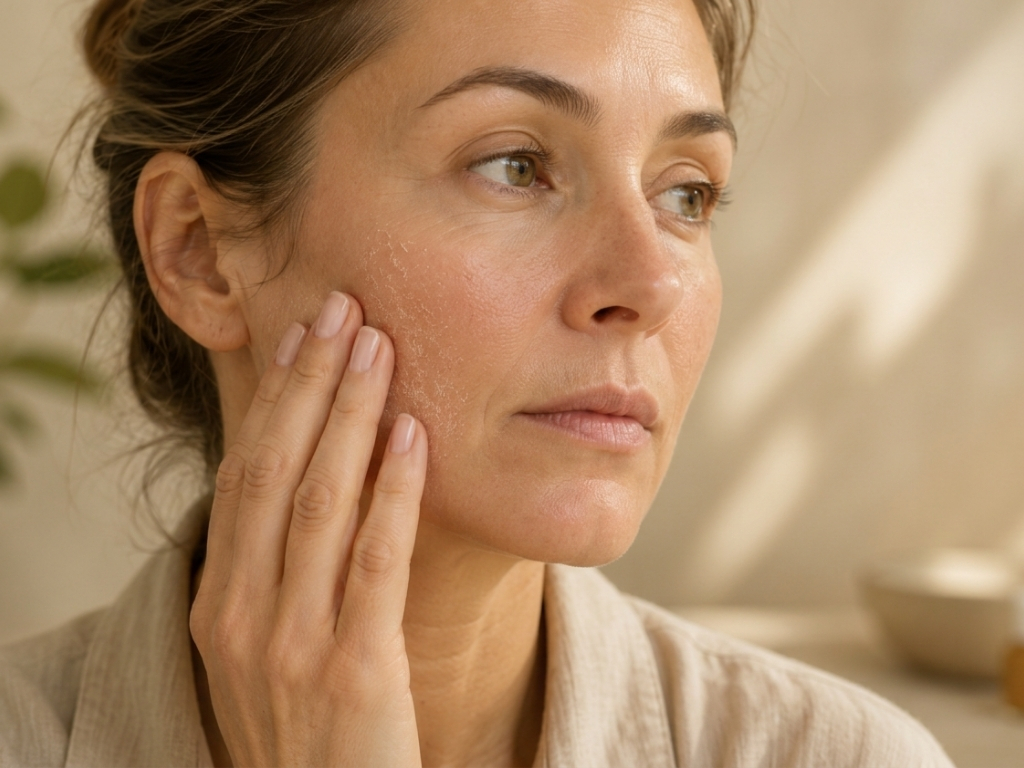
Dry skin and dehydrated skin can look surprisingly similar, but they are not quite the same. Understanding the distinction can help you choose skincare based on what your skin needs rather than simply reaching for a richer product.
Dehydrated skin describes skin with insufficient water in its outer layers. It is a temporary condition rather than a skin type, which means even naturally oily or combination skin can become dehydrated.
Signs may include:
- Tightness or discomfort
- Dull or tired-looking skin
- Fine dehydration lines that appear more noticeable
- Skin that feels tight after cleansing but may still become oily
- A temporary loss of plumpness or suppleness
Dehydrated skin generally benefits from water-binding humectants and a routine that helps prevent that water from being lost too quickly.
What Does Dry Skin Look Like?
Dry skin is associated with reduced barrier function and changes in the components that normally help keep the stratum corneum soft, flexible and adequately hydrated. It may also produce less sebum, particularly as skin matures.
Common signs include:
- Rough or flaky texture
- Persistent tightness
- Increased sensitivity or discomfort
- Skin that feels less supple
- A tendency to become dry again soon after applying lightweight products
Dry skin therefore often needs more than hydration alone. Emollients and barrier-supporting lipids can help improve softness and reduce moisture loss, while humectants provide complementary hydration.
And it is possible to be both dry and dehydrated at the same time. In fact, this combination becomes particularly relevant when we talk about mature skin.
Why Mature Skin Often Needs Both Hydration and Moisture
As skin matures, its ability to maintain an optimal balance of water and lipids can change. Natural moisturizing factors, barrier lipids and sebum production may decline, while the skin can become more susceptible to dryness and increased water loss.
This helps explain why a skincare routine that worked well years ago may no longer leave the skin feeling comfortable. Mature skin may feel tighter, appear less supple or show fine dehydration lines more readily — even when a moisturizer is being used regularly.
The solution, however, is not automatically to use the richest cream available.
A balanced approach to hydration vs moisture in skincare considers two complementary needs: providing water-binding ingredients to support hydration and providing appropriate emollient or occlusive support to help maintain softness and limit excessive water loss.
Hydration Can Change How Mature Skin Looks
When the outer layers of the skin are adequately hydrated, they can appear smoother and more supple. Fine lines caused or emphasized by dehydration may also become temporarily less noticeable.
This is one reason ingredients such as hyaluronic acid, glycerin and panthenol can be valuable in a mature-skin routine. They do not reverse structural skin aging, but they can support something fundamental to healthy-looking skin: adequate hydration.
Mature Skin Still Needs Its Barrier
Hydration works best when the skin can retain it.
Depending on individual skin needs, ingredients such as squalane, jojoba and other well-selected emollients can complement a water-based hydrating step by improving softness and supporting a more comfortable skin surface.
This does not mean every mature complexion needs a heavy, oily routine. The goal is to find the right balance of water-binding ingredients and lipid support for your own skin.
At BIOYOND, we believe mature skin should not simply be overloaded with more products because of age. A thoughtful routine starts by understanding what the skin needs and giving each product a clear purpose.
Humectants, Emollients and Occlusives: What Does Each One Do?
Understanding hydration vs moisture in skincare becomes easier when you understand three ingredient groups frequently used in moisturizers and hydrating products: humectants, emollients and occlusives.
They are not competing categories. In a well-designed routine or formulation, they can complement one another.
Humectants — Supporting Water in the Skin
Humectants are ingredients that attract and bind water, helping maintain hydration within the outer layers of the skin.
Common examples include:
- Hyaluronic acid and sodium hyaluronate
- Glycerin
- Panthenol
- Tremella mushroom polysaccharides
Different humectants have different properties, which is why formulators often combine them rather than relying on a single ingredient.
If you’d like to understand why the molecular size of hyaluronic acid matters, read our guide Hyaluronic Acid for Skin: How Molecular Weight Changes Hydration.
Emollients — Supporting Softness and Suppleness
Emollients help soften and smooth the skin by improving the feel of its surface. Many botanical oils, esters and lipid-like ingredients function primarily as emollients.
Examples include:
- Squalane
- Jojoba oil
- Marula oil
- Selected botanical oils and butters
The right emollient system can make dry or mature skin feel more supple without necessarily requiring a very heavy texture.
Occlusives — Helping Reduce Water Loss
Occlusive ingredients form a protective layer at the skin’s surface that helps slow evaporation of water.
Some richer oils, waxes and butters can contribute varying degrees of occlusivity, while ingredients such as petrolatum provide substantially stronger occlusive effects.
“Occlusive” does not mean bad or pore-clogging by definition. It describes a function. Whether a more occlusive product is appropriate depends on the formula, skin type, climate and individual needs.
Why a Good Formula May Use All Three
A moisturizer does not have to fit neatly into only one category.
A thoughtfully formulated product may combine humectants to support water content, emollients to improve softness and occlusive components to help reduce water loss.
This is why reading one hero ingredient on the front of a package rarely tells you everything about how the product will perform. The complete formulation and how it fits into the rest of your routine matters more.
Why a Hydrating Serum May Not Be Enough
A hydrating serum can be an excellent first step for dehydrated skin, but adding water-binding ingredients is only part of the picture.
If the skin barrier is not retaining water effectively, or if the skin is naturally dry and lacking sufficient lipid support, hydration may feel temporary. You might apply a lightweight serum and notice that your skin initially feels comfortable and plump, only for tightness to return later.
This does not necessarily mean the serum is ineffective. It may simply mean your skin needs both hydration and an appropriate moisturizing step.
Start With Hydration
A water-based serum or toner-serum can deliver humectants directly to freshly cleansed skin.
BIOYOND Hyaluronic Duo Serum + Tonic was formulated for this step. It combines two molecular weights of Sodium Hyaluronate with glycerin, Tremella mushroom extract and Panthenol, while 4% Niacinamide provides complementary barrier support.
Its lightweight texture allows it to function as both a hydrating tonic after cleansing and a serum before moisturizer.
Follow With Moisture When Your Skin Needs It
After hydration, a cream or richer lipid-based product can help provide the emollient support that a water-based serum cannot provide on its own.
This is particularly useful when skin feels persistently dry, rough or uncomfortable, or when environmental conditions increase moisture loss.
But the goal is not to “seal in” every serum with the heaviest product possible. Your moisturizing step should match your skin. Some complexions need a lightweight cream; others benefit from richer lipid support, particularly at night or during colder, drier weather.
A useful principle is:
Hydrate first. Support the barrier next. Add richer protection only when your skin needs it.
How to Layer Hydration and Moisture in Your Skincare Routine
Once you understand hydration vs moisture in skincare, layering products becomes much simpler. Rather than focusing on how many steps you can add, think about moving from lighter, water-based products toward richer products according to what your skin actually needs.
A simple routine can look like this:
Step 1 — Cleanse Without Stripping the Skin
Cleansing should remove makeup, sunscreen, excess oil and daily impurities without leaving the skin feeling excessively tight or uncomfortable.
If your skin regularly feels stripped immediately after cleansing, the problem may begin before you even reach for your serum or moisturizer.
Step 2 — Add Hydration
Apply your hydrating toner or serum to clean skin. This is where humectants such as hyaluronic acid, glycerin and panthenol can help support water content in the outer layers of the skin.
A lightweight product such as Hyaluronic Duo Serum + Tonic can occupy this step without requiring separate toner and serum layers.
Step 3 — Add Moisture and Lipid Support
Follow with a moisturizer appropriate for your skin type and current needs. This step can provide emollients and other ingredients that help soften the skin and support its barrier.
Mature skin does not automatically require the richest cream available. Texture should be chosen according to how your skin feels, your environment and the rest of your routine.
Step 4 — Add a Facial Oil or Balm When Needed
A facial oil or balm can provide additional emollient or occlusive support when skin feels particularly dry or when environmental conditions increase moisture loss.
This is an optional step, not something every complexion needs every day.
Step 5 — Protect During the Day
In the morning, finish with broad-spectrum sunscreen. Hydration and moisturization support the skin’s condition and comfort, but neither replaces daily UV protection.
The most effective routine is not necessarily the longest one. It is the routine in which each product has a clear purpose and your skin remains comfortable throughout the day.
What Is Your Skin Trying to Tell You?
Skin does not always fit neatly into a “dry,” “oily” or “normal” category. How it feels throughout the day can provide useful clues about whether your routine is supplying enough hydration, moisture or both
“My Skin Is Oily but Still Feels Tight”
Oiliness does not rule out dehydration. Your skin can produce plenty of sebum while still having insufficient water in its outer layers.
Rather than immediately adding a heavy cream, consider whether your routine includes adequate humectant-based hydration and whether cleansing is leaving the skin feeling stripped.
“My Serum Feels Great, but My Skin Feels Dry Again Later”
Your serum may be providing hydration, but your skin may need additional emollient or barrier support to remain comfortable.
Try following the hydrating step with an appropriate moisturizer rather than simply applying more serum.
“My Skin Feels Rough or Flaky”
Persistent roughness or flaking can suggest that hydration alone is unlikely to be enough. A routine containing appropriate emollients and barrier-supporting ingredients, alongside gentle cleansing and hydration, may be more suitable.
If significant dryness, itching, cracking or irritation persists, it is worth discussing it with a dermatologist or other qualified healthcare professional rather than continuing to experiment with cosmetic products.
“My Skin Has Become Drier as I’ve Gotten Older”
This is common. Changes in sebum production, barrier lipids and the skin’s ability to retain water can influence how mature skin feels.
Instead of automatically adding more products, reassess the balance of your routine. You may benefit from both a humectant-rich hydration step and more appropriate lipid support than you needed previously.
“My Skin Looks Dull and Fine Lines Suddenly Look More Visible”
Temporary dehydration can make the skin surface appear less supple and emphasize fine lines.
Improving hydration may make the complexion look smoother and more refreshed, but it is important to distinguish dehydration lines from structural wrinkles. A hydrating product can improve the appearance associated with dehydration; it should not be expected to reverse structural skin aging.
Common Hydration and Moisture Mistakes
Even a carefully chosen skincare routine can leave skin feeling uncomfortable when hydration and moisture are approached as interchangeable. Here are some common mistakes worth avoiding.
Using Facial Oil to Hydrate Dehydrated Skin
Facial oils can be excellent emollients, but oil does not provide water to the skin.
If your skin is dehydrated, applying only oil may improve softness without fully addressing the lack of water in the outer skin layers. A water-based hydrating step underneath may be more appropriate
Applying More and More Hyaluronic Acid
More hyaluronic acid does not automatically mean better hydration.
The overall formulation matters: molecular weight, concentration, complementary humectants, texture and what you apply afterward can all influence how a hydrating product performs.
This is one reason we prefer to think in terms of a hydration system rather than a single hero ingredient.
Choosing a Heavy Cream Just Because Your Skin Is Mature
Mature skin often benefits from additional lipid and barrier support, but age alone does not determine the ideal texture.
Some mature complexions prefer lightweight emulsions, while others feel more comfortable with richer creams or balms. Choose according to the condition of your skin rather than the age category printed on a product.
Over-Cleansing
If skin feels very tight immediately after cleansing, adding increasingly rich products afterward may not address the underlying problem.
Harsh or excessive cleansing can disrupt the skin surface and contribute to discomfort. A well-balanced routine begins with effective but gentle cleansing.
Assuming Drinking More Water Replaces Topical Skincare
Adequate hydration is important for overall health, but simply drinking more water is not a substitute for topical skincare when the issue involves the stratum corneum and skin barrier.
Topical humectants, emollients and occlusives act locally to influence the condition and water balance of the outer skin.
Adding Too Many Products at Once
When skin feels dry or dehydrated, it can be tempting to introduce several new serums, oils and creams simultaneously.
That can make it difficult to understand what is actually helping — or what may be causing irritation.
A simpler approach is often more useful: cleanse, hydrate, moisturize according to need and protect from UV exposure during the day.
Frequently Asked Questions About Hydration vs Moisture in Skincare
Can skin be dry and dehydrated at the same time?
Yes. Dry skin can have insufficient lipid and barrier support while also lacking adequate water in its outer layers. In this situation, the skin may benefit from both humectant-based hydration and appropriate emollient or occlusive support.
Does oily skin need moisturizer?
It can. Oily skin produces more sebum, but that does not necessarily mean its water balance or barrier needs are optimal. The key is choosing an appropriate texture rather than assuming oily skin should avoid moisturizer completely.
Should I apply a hydrating serum before moisturizer?
Generally, yes. Water-based hydrating products are usually applied before richer creams, oils or balms. This allows humectants to support hydration before the moisturizing step provides additional softness and barrier support.
Is hyaluronic acid a moisturizer?
Hyaluronic acid is primarily a humectant. It helps bind water and support hydration but does not provide the same lipid or occlusive functions as a complete moisturizer.
For a deeper explanation, read Hyaluronic Acid for Skin: How Molecular Weight Changes Hydration.
Make that article title an internal link to the HA article we just rebuilt.
How do I know whether my skin needs hydration or moisture?
Tightness combined with dullness or temporary dehydration lines may suggest a need for more hydration, while persistent roughness, flaking and dryness may indicate that additional emollient or barrier support would be useful.
Many people — particularly those with mature or dry skin — benefit from both, rather than choosing one or the other.
The Takeaway
Understanding hydration vs moisture in skincare is less about choosing between water and oil and more about understanding how different parts of a formula support the skin.
Humectants help maintain water in the outer skin. Emollients improve softness and suppleness. Occlusive ingredients can help reduce water loss. And the skin barrier plays an essential role in keeping these processes in balance.
For mature or dehydrated skin, the answer is not necessarily more products or stronger actives. Often, a thoughtful combination of hydration, appropriate lipid support, gentle cleansing and daily sun protection is more useful than an unnecessarily complicated routine.
At BIOYOND, this principle guides how we formulate: each ingredient should have a reason to be there, and each product should have a clear role in the routine.