

How to Choose a Gentle Face Cleanser Without Stripping Your Skin
Choosing a gentle face cleanser sounds simple, but cleansing is one of the easiest steps to get wrong. A cleanser needs to remove everyday impurities, excess oil, sunscreen and makeup effectively without leaving skin feeling tight, dry or uncomfortable. And more foam or a stronger “clean” feeling doesn’t necessarily mean better cleansing.
What Makes a Face Cleanser Gentle?
A gentle face cleanser is not simply one that produces less foam. What matters is the cleansing system as a whole: the type and concentration of surfactants, the supporting ingredients, the product’s pH, and how the skin feels after rinsing. A well-formulated cleanser should remove what needs to be removed while avoiding an unnecessarily harsh or stripped after-feel.
A gentle face cleanser shouldn’t need to leave that familiar “squeaky-clean” feeling to be effective. If skin repeatedly feels tight or uncomfortable immediately after washing, the cleansing system, water temperature, cleansing frequency, or combination of products in the routine may be more aggressive than the skin needs. The goal is clean skin that still feels comfortable after rinsing.
Is a Foaming Cleanser Bad for Dry or Mature Skin?
Not necessarily. Foam itself does not determine whether a cleanser is harsh or gentle. What matters more is the surfactant system, its concentration, the overall formulation, and how the product performs on the skin. A thoughtfully formulated gentle face cleanser can still produce foam and provide effective daily cleansing while leaving dry or mature skin feeling comfortable.
For skin that tends to feel dry, look beyond words such as “foam” or “gentle” on the label. Pay attention to whether the cleanser uses a mild cleansing system and includes ingredients chosen to support a comfortable after-feel. Most importantly, notice how your own skin responds: after cleansing, it should feel clean and refreshed, not persistently tight, rough or overly dry.
What Ingredients Should You Look for in a Gentle Face Cleanser?
Start with the cleansing agents, or surfactants. These are the ingredients that help water lift away oil, sunscreen and everyday residue so they can be rinsed from the skin. Surfactants vary considerably, which is why the overall cleansing system matters more than simply whether a product foams.
Supportive ingredients can also influence how a cleanser feels during and after use. Aloe vera and panthenol, for example, are often incorporated into gentle formulations to help support a softer, more comfortable after-feel. Humectants such as glycerin can also contribute to the sensory balance of a rinse-off formula.
Botanical ingredients can add another dimension, but more botanicals do not automatically make a cleanser better. Their concentration, quality and role in the complete formulation matter. A thoughtfully formulated cleanser should have a clear purpose for each ingredient rather than relying on a long ingredient list to appear more effective.
How BIOYOND Approaches Gentle Cleansing
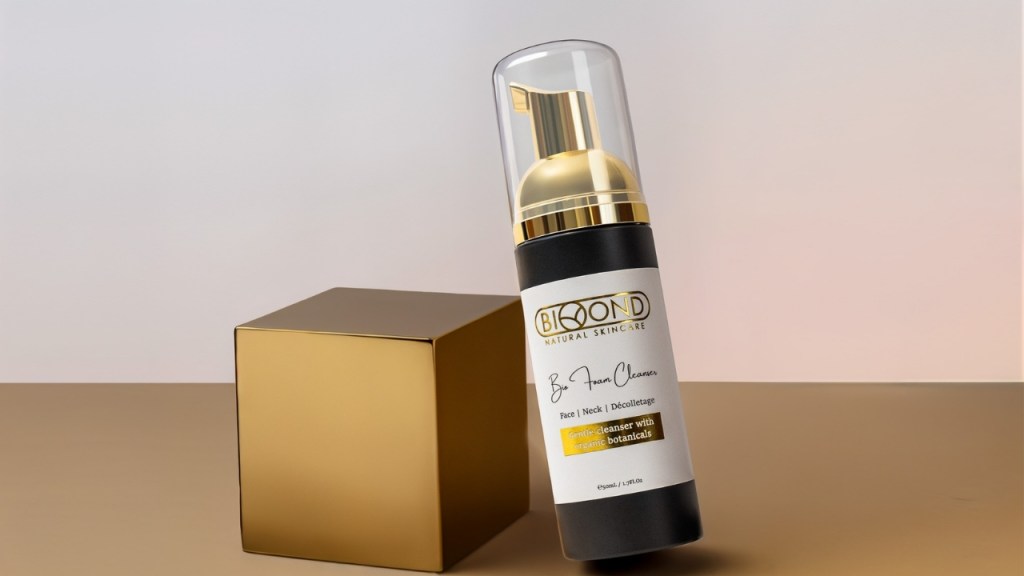
When formulating Bio Foam Cleanser, the goal was not to create the strongest possible foam, but a cleansing experience that feels effective without leaving skin unnecessarily stripped. The formula uses Decyl Glucoside, a mild plant-derived surfactant, supported by Yucca extract, a botanical ingredient naturally containing saponins.
This approach is also consistent with dermatologist guidance from the American Academy of Dermatology, which recommends using a gentle, non-abrasive cleanser and lukewarm water rather than scrubbing the skin.
The cleansing system is balanced with aloe vera, glycerin and panthenol to support a softer, more comfortable after-feel. Lavender, witch hazel and lemon balm hydrosols add the botanical character of the formula and provide its subtle natural aroma without added essential oils or artificial fragrance.
The result is a gentle foaming face cleanser designed for everyday use on the face, neck and décolleté. It can be used on its own for a simple morning cleanse or as the water-based cleansing step in an evening routine.
Foaming Cleanser vs. Oil Cleanser: Which One Do You Need?
A foaming cleanser and an oil cleanser are not necessarily alternatives — they perform differently and can have different roles in a skincare routine. A gentle foaming cleanser is useful for removing everyday impurities, excess oil and water-soluble residue, while an oil cleanser is particularly useful for dissolving makeup, sunscreen and oil-soluble residue.
If you wear little or no makeup and your skin feels comfortable after a single cleanse, one gentle cleanser may be enough. If you wear makeup, water-resistant sunscreen or prefer a more thorough evening cleanse, starting with an oil cleanser and following with a water-based cleanser can be useful.
The best choice depends on what is on your skin and how your skin responds, rather than following a rule that everyone needs two cleansers. Cleansing should be thorough enough for your routine without becoming an unnecessarily aggressive step.
Do You Need to Double Cleanse?
Double cleansing means using an oil-based cleanser first, followed by a water-based cleanser. The first step helps dissolve makeup, sunscreen and oil-soluble residue, while the second removes remaining residue and completes the cleansing step.
But double cleansing is not necessary for everyone, every day. If you have worn heavier makeup, water-resistant sunscreen or accumulated more product on the skin, two cleansing steps may be useful in the evening. On lighter days, one well-formulated gentle face cleanser may be all your skin needs.
At BIOYOND, Plum Glow Cleansing Oil can be used as the first step when an oil cleanse is needed, followed by Bio Foam Cleanser as the water-based second step. The routine can therefore be adjusted according to what is actually on your skin rather than automatically adding more products.
How Often Should You Wash Your Face?

For many people, cleansing in the evening is the most important step because it removes the sunscreen, makeup, excess oil and everyday residue that have accumulated throughout the day. Morning cleansing can be useful too, but it does not need to be aggressive.
How often you cleanse should also reflect your skin and lifestyle. Someone with oilier skin, frequent workouts or heavier product use may prefer cleansing morning and evening, while dry or mature skin may feel more comfortable with a very gentle morning cleanse or, in some cases, simply rinsing with lukewarm water.
Rather than following a rigid rule, pay attention to the result. Clean skin should feel fresh and comfortable, not tight, irritated or increasingly dry. If cleansing consistently leaves your skin uncomfortable, reconsider the cleanser, frequency, water temperature and the other products used in your routine.
Does the pH of a Face Cleanser Matter?
Yes, but pH should be considered as part of the whole formulation, not treated as a single number that determines whether a cleanser is good or bad. Healthy facial skin naturally maintains a mildly acidic surface environment, and a cleanser formulated within an appropriate range can help avoid unnecessary disruption during washing.
This is also why claims such as “pH-balanced” should not be the only reason to choose a cleanser. The surfactant system, concentration, supporting ingredients, cleansing frequency and, most importantly, how your skin feels after repeated use all matter.
For BIOYOND, pH is one of the parameters considered during formulation and final product testing, alongside cleansing performance, foam, aroma and after-feel.
How to Choose the Right Gentle Face Cleanser
The right cleanser should match both what you need to remove and how your skin responds afterward. Look for a mild cleansing system, avoid assuming that more foam means better cleansing, and pay attention to whether your skin remains comfortable after rinsing.
For dry or mature skin in particular, a cleanser that repeatedly leaves the face feeling tight may not be the best fit, even if it is marketed as “gentle.” At the same time, there is no need to avoid foaming cleansers altogether: formulation matters more than the word foaming on the label.
Most importantly, keep cleansing in perspective. It is the first step of a routine, not a treatment that needs to solve every skin concern. Cleanse effectively, then use the rest of your routine purposefully for hydration, targeted care, moisturization and daily sun protection.
Want to understand what comes after cleansing? Read our guide to building a [consistent skincare routine] and learn how the individual steps work together.
BIOYOND Formulator Note: Bio Foam Cleanser was developed with the philosophy that effective cleansing should leave skin feeling clean and comfortable, not stripped. Formulated in small batches in Canada.